Recycling and Sustainability at Man And A Van Hampstead
 At Man And A Van Hampstead, sustainability is built into the way we work across everyday moves, clearances, and transport planning. As a Hampstead man and van service serving busy residential streets, flats, and mixed-use buildings, we aim to reduce waste at every stage of the job. Our approach supports a recycling percentage target of 85% for suitable reusable and recyclable items diverted away from disposal, helping keep good materials in circulation and cut unnecessary landfill use.
We know that recycling in Hampstead is closely connected to the wider borough approach to waste separation, where households and businesses are encouraged to sort mixed recyclables, food waste, cardboard, glass, metals, and textiles more carefully. That local culture of separation matters when we are clearing homes, offices, and storage spaces, because it allows us to identify items that can be routed responsibly rather than treated as general rubbish. Our team sorts loads with attention to material type, condition, and onward destination.
Our Man And A Van Hampstead recycling process begins with a practical question: what can be reused, what can be donated, and what should go through legitimate recycling channels? We separate furniture, electricals, metals, paper-based packaging, books, and household goods before any transfer is arranged. By applying this sorting method, the service supports cleaner collection streams and reduces contamination, which is one of the biggest barriers to effective recycling.
Local Transfer Stations and Responsible Routing
 A key part of our sustainability strategy is using appropriate local transfer stations and waste facilities in line with current borough and regional requirements. For jobs in and around Hampstead, that means planning routes to nearby authorised transfer stations that can handle separated materials efficiently, while avoiding unnecessary mileage. This is particularly important in London, where traffic congestion can increase emissions if routes are not carefully managed.
Our Hampstead man and van operations are designed to minimise wasted journeys by grouping collections sensibly and prioritising full-load routing where possible. When materials need to be broken down further, transfer stations provide a controlled setting for sorting recyclable fractions such as timber, scrap metal, cardboard, and mixed consumer items. In practice, this helps support the recycling targets we set while keeping disposal compliant and traceable.
We also pay attention to local borough rules around waste separation and recycling preparation. In many parts of north-west and central London, residents are encouraged to keep certain materials clean and dry, and to separate items like garden waste, electrical goods, and bulky materials. Our team mirrors that approach on site, helping ensure what we collect can move into the most suitable stream at the transfer station or recycling partner.
Charity Partnerships and Reuse First
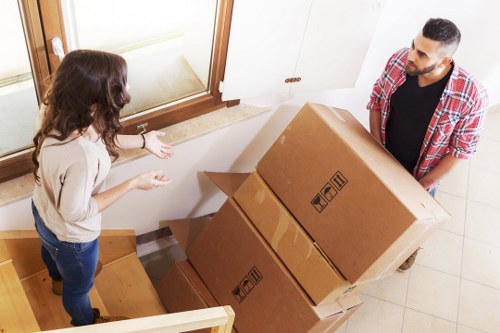 Wherever possible, Man And A Van Hampstead follows a reuse-first approach. Items that are safe, functional, and in good condition may be set aside for donation through charity partnerships and community reuse channels. This is especially relevant during home clearances, furniture removals, and office refreshes, when many objects still have a useful life even if they are no longer needed by the owner.
Our charity partnerships support the movement of eligible household items such as tables, chairs, storage units, small appliances, books, and textiles. By diverting these goods toward charitable reuse, the Hampstead recycling service helps reduce pressure on local waste systems and extends the lifespan of everyday products. This is a practical way to support both sustainability and community benefit without adding complexity for the customer.
We also look for opportunities to separate materials that charities cannot use directly but that can still be recycled through specialist channels. For example, metal bed frames, wood furniture components, and cardboard packaging can often be directed away from disposal, while electronics may be routed to compliant WEEE recovery facilities. That combination of donation and recycling keeps our waste hierarchy focused on the most sustainable option available.
Low-Carbon Vans and Smarter Transport
Transport emissions are a major part of any removal operation, which is why our Man And A Van Hampstead service uses low-carbon vans and smart route planning to reduce environmental impact. We prioritise efficient vehicles with improved fuel economy and lower emissions, and we maintain them carefully so they operate at peak performance. Choosing the right van size also matters: using a vehicle that fits the job properly avoids repeated trips and unnecessary fuel use.
In a dense area like Hampstead, low-carbon logistics make a real difference. Narrow roads, parking pressure, and stop-start traffic all increase the importance of efficient driving and sensible scheduling. By combining grouped collections with lower-emission vans, our Hampstead man and van operations can cut carbon output while still meeting the practical demands of local moves and clearances.
We also encourage a waste-aware loading method. Loads are arranged so recyclable and reusable items are accessible first, which helps speed up unloading at transfer stations and charities. This reduces idle time, supports better route efficiency, and strengthens our overall recycling performance across multiple jobs in the area.
What Recycling Looks Like in Practice
 In everyday work, recycling can involve many different activities depending on the type of property and the items being removed. A flat clearance may produce cardboard, plastics, textiles, and small electricals, while a house move might include reusable furniture, books, and packaging that can be sorted separately. For offices, the material mix can include filing waste, office chairs, shelving, and IT equipment that may need specialist handling.
The borough approach to waste separation is especially useful when planning these collections, because it encourages clearer sorting before items enter the chain. We follow that principle by keeping recyclable streams distinct where possible, so materials are less likely to become contaminated. Clean separation improves recovery rates and helps transfer stations process the load more effectively.
Our recycling in Hampstead work also extends to smaller details, such as separating metal fixings from furniture where practical, removing batteries from devices, and ensuring paper-based materials are not mixed with wet waste. These simple steps may seem minor, but they help create a cleaner recycling output and support a lower-impact service overall.
A Practical Commitment to a Greener Service
 For customers looking for a Hampstead man and van option that takes sustainability seriously, our recycling and sustainability practices are designed to be both responsible and workable. From a clear recycling percentage target to local transfer stations, charity partnerships, and low-carbon vans, the service is built around doing the job with less waste and fewer emissions.
That commitment is reflected in how we plan each collection, sort each load, and choose each onward route. The result is a Man And A Van Hampstead service that supports reuse, improves recycling outcomes, and aligns with the borough’s wider waste separation ethos. In a part of London where space is limited and environmental awareness is high, that approach helps make every move or clearance a little more sustainable.